
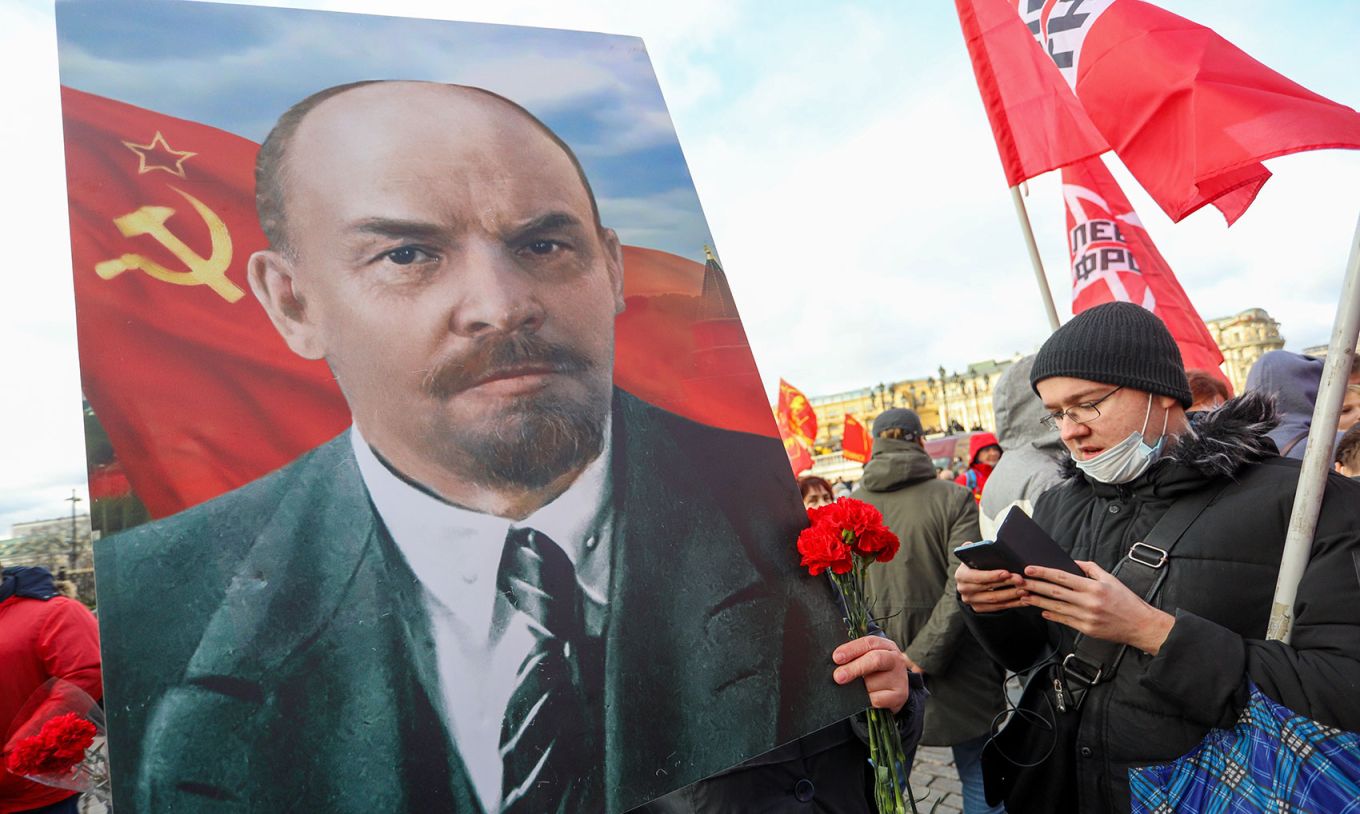
The Revolution led to the Russian Civil War between the communist Red Army, the White Army and numerous other factions. From 1917-1924 the war took 10-17 million civilian and military lives, making it the deadliest military event in Russia's history behind World War II.
Андрей Никеричев / Агентство «Москва»
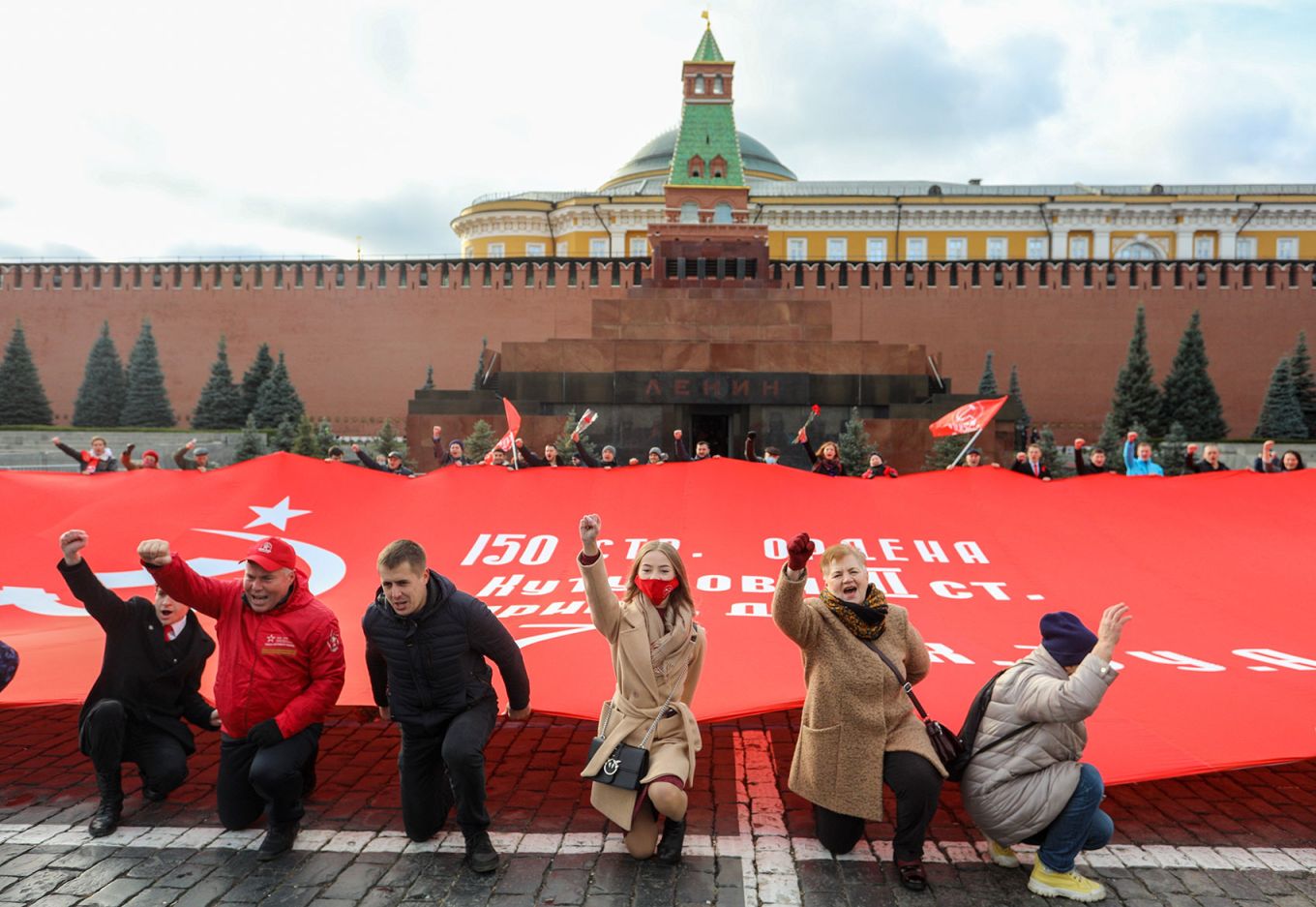
The Bolsheviks took power on Oct. 25, 1917. At the time Russia, followed the Julian calendar, which is 13 days behind the globally dominant Gregorian calendar. A few years later, Russia switched to Gregorian and Oct. 25 became Nov. 7, but the Revolution continues to be remembered as the “October Revolution.”
Андрей Никеричев / Агентство «Москва»
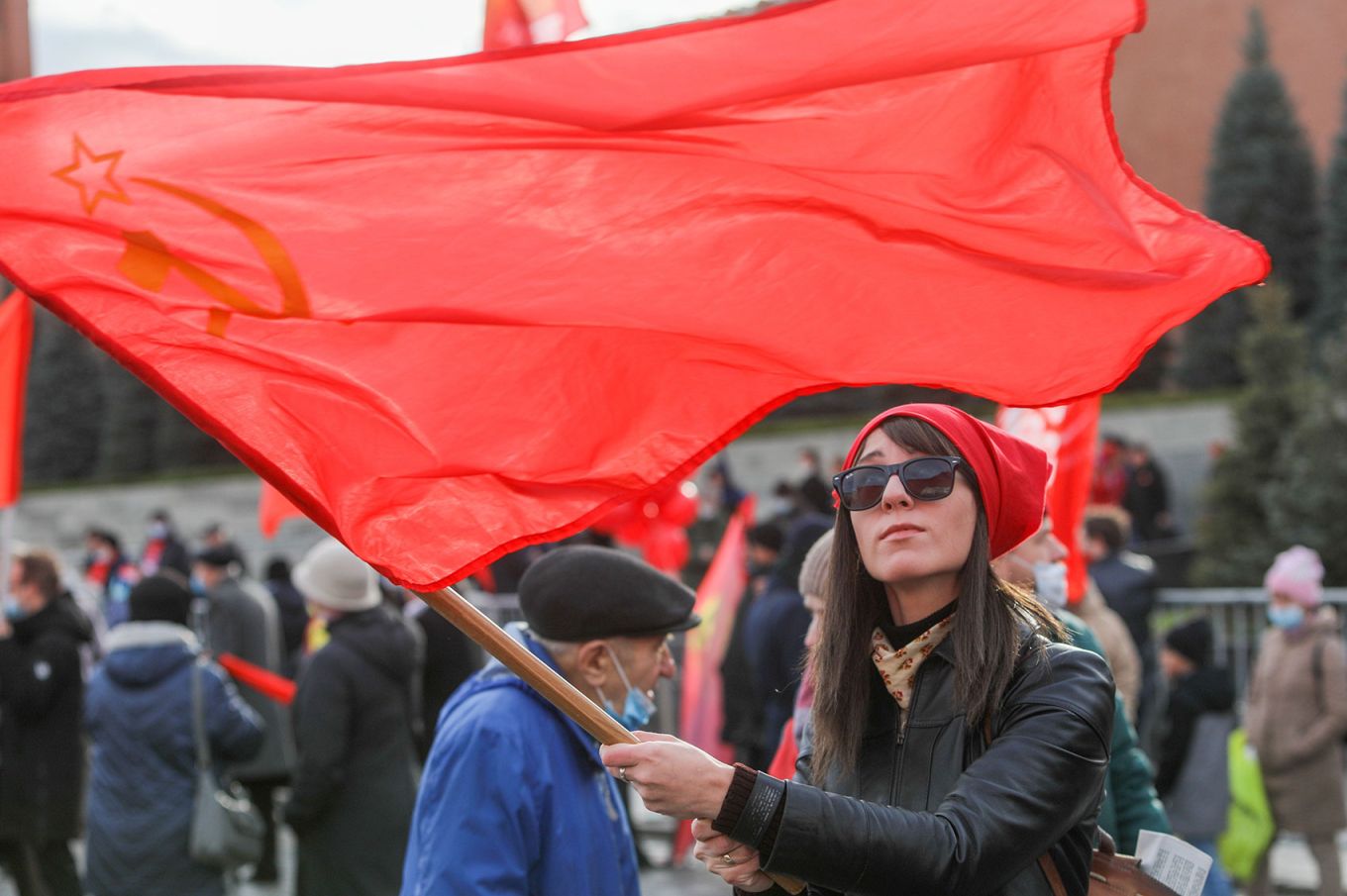
Nov. 7 was one of the major public holidays in U.S.S.R., commemorated with an annual parade on Red Square. The most famous one happened in 1941, when the military regiments on parade went directly to the front following the event to defend Moscow from advancing Nazi forces.
Андрей Никеричев / Агентство «Москва»
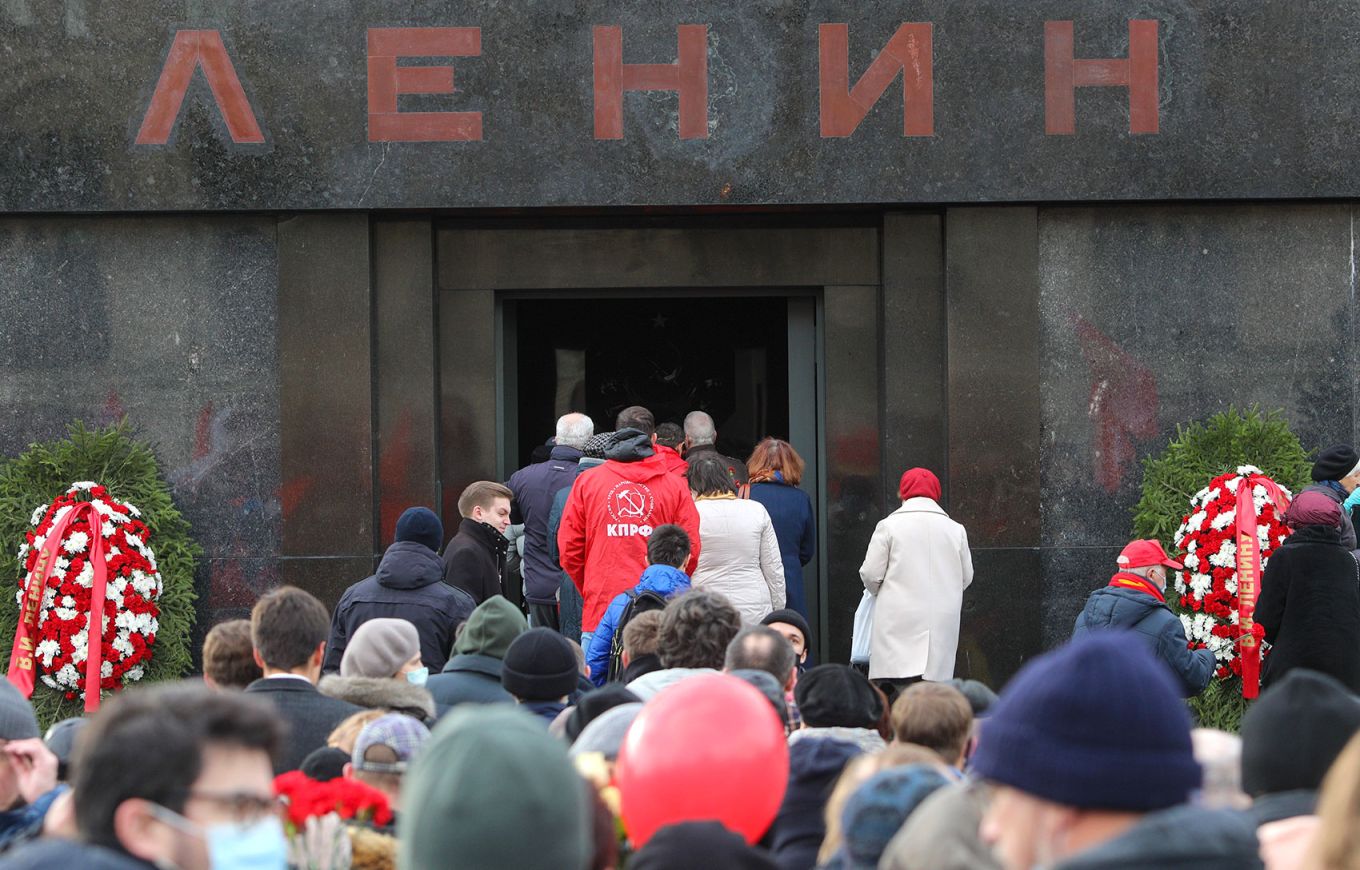
Since Lenin's death in 1924, his preserved body has been on display to the public in a mausoleum on Red Square — despite his wish to be buried with his family in St. Petersburg. Recent polling has shown that about 45% of Russians think Lenin’s body should be reburied, 42% think the body should remain at the mausoleum.
Андрей Никеричев / Агентство «Москва»
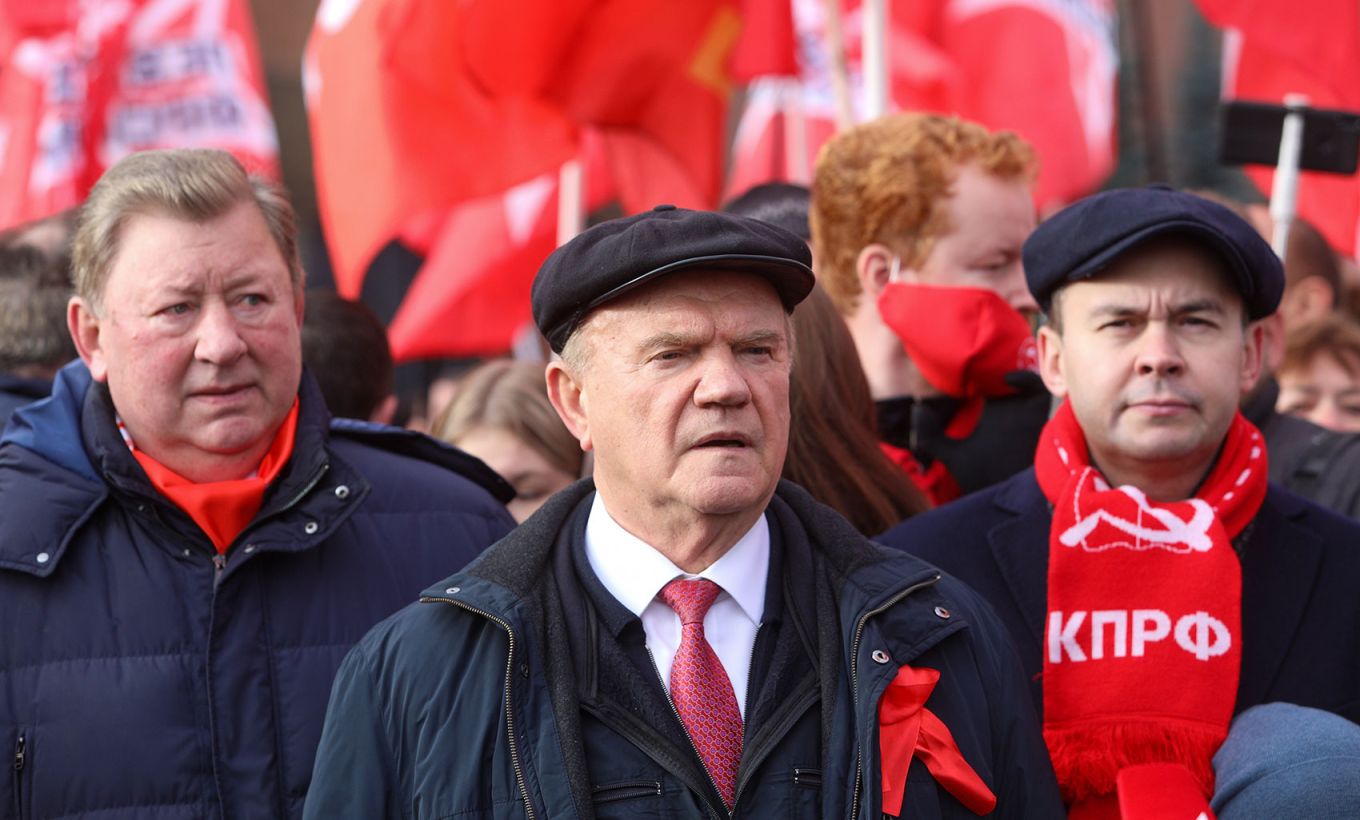
Russian Communist Party leader Gennady Zyuganov took part in the march. After the fall of the U.S.S.R. the parade tradition died out, yet the Communist Party and its sympathizers continue to celebrate the anniversary. According to the independent Levada Center pollster, 17% of Russians said they planned to celebrate Nov. 7 this year. Roughly the same number said they planned to celebrate National Unity Day on Nov. 4, a state holiday that is seen by some as a Kremlin attempt to replace Nov. 7 with a more nationalist alternative.
Андрей Никеричев / Агентство «Москва»
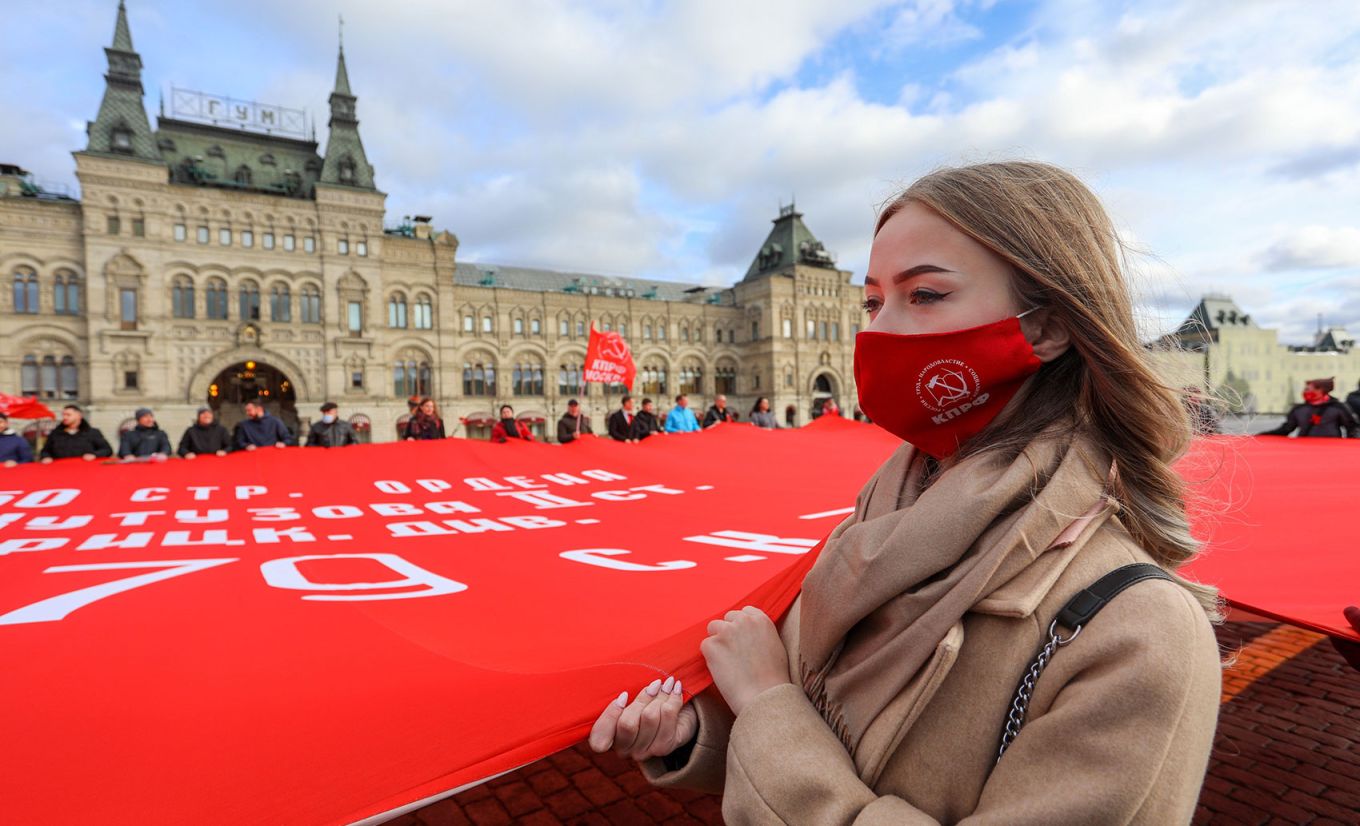
Forty-six percent of Russians think the October Revolution benefited society, according to a poll last year by the state-run VTsIOM pollster. Of the political forces active in 1917, the Bolsheviks enjoy the most support with 32% of Russians approving of their 1917 uprising, the poll said.
Андрей Никеричев / Агентство «Москва»
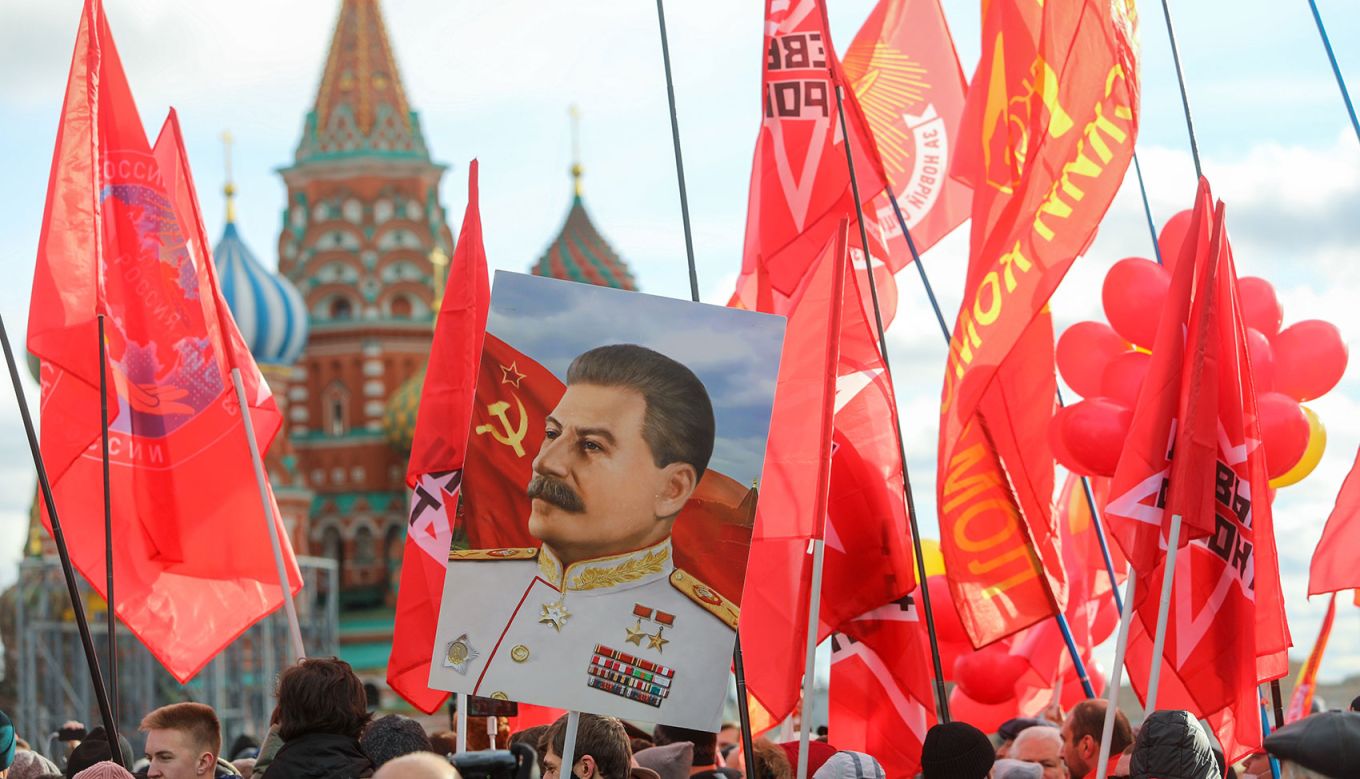
Some 60% of Russians hold a favorable view of Soviet leader Josef Stalin, according to a recent Levada poll — a record share since Levada began asking the question in 2001. Just 11% respondents view Stalin negatively. During the 25 years that Stalin ruled the U.S.S.R., he oversaw campaigns of mass repression that killed, imprisoned or displaced millions.
Андрей Никеричев / Агентство «Москва»
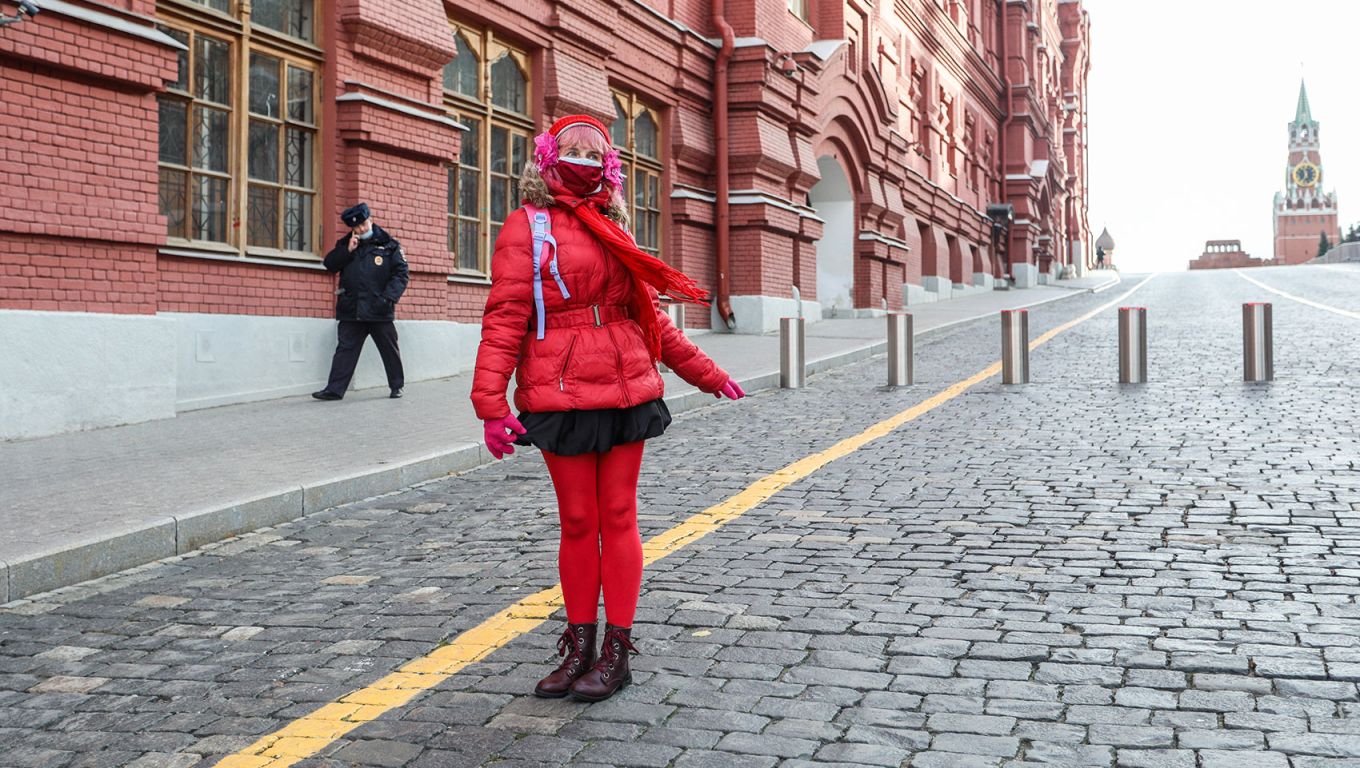
In the central Russian city of Perm, police detained two activists who protested against torture and other human rights violations in Russian prisons. In St. Petersburg, a former State Duma member was arrested while attending a pro-Communist event. While authorities arrested some activists in other cities, the demonstrations in Moscow were not hindered by police.
Андрей Никеричев / Агентство «Москва»


